Sterilization of mobile vehicles
2026/1/9

Mobile Vehicle Sterilization Solution
Efficient, safe, and comprehensive ambulance disinfection system to effectively prevent and control healthcare-associated infections
Solution Overview
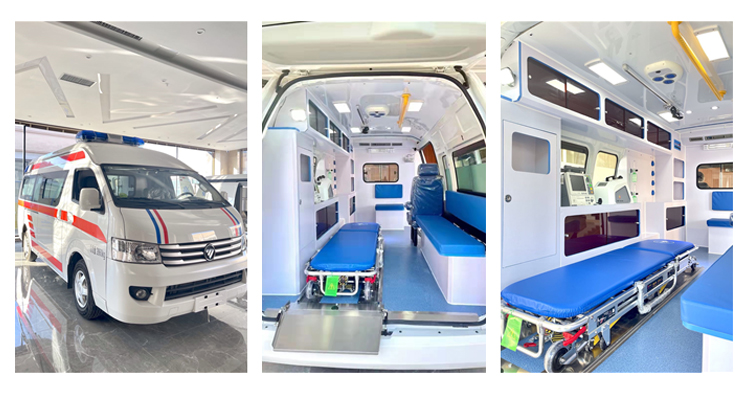
Ambulances are critical components of hospital emergency response systems, primarily used for pre-hospital transport of emergency patients. They function as mobile ICUs or emergency rooms, undertaking the critical tasks of rescuing and transporting various critically ill patients. Due to the high volume of patients and complexity of diseases, including infectious diseases and various critical conditions, ambulance cabin air and surfaces become heavily contaminated, directly impacting the health of medical staff and patient recovery outcomes [1](@ref).
Ambulances also serve as significant vectors and sources of pre-hospital disease transmission and bacterial infections, representing a weak link in healthcare-associated infection prevention that can easily lead to cross-infections between patients. It is essential to select efficient, scientific, and rapid disinfection and sterilization products and solutions to conduct targeted disinfection, sterilization, and cleaning work, proactively preventing disease transmission and effectively controlling healthcare-associated infections [2](@ref).
The Teling Biological Technology Institute has developed the X150 ambulance-specific disinfection and sterilization solution to address the special requirements of ambulance disinfection. Utilizing dry fog disinfection technology, this solution achieves comprehensive sterilization of ambulance spaces and surfaces, effectively eliminating pathogenic microorganisms and ensuring the safety of both medical staff and patients [1,5](@ref).
Ambulance Contamination Source Analysis
Interior Air Pollution
As vehicles transporting critically ill patients, ambulances become filled with large quantities of bacteria after transporting, receiving, and rescuing patients inside the vehicle [1](@ref).
Surface Contamination
During patient rescue operations, surfaces including seats, interior walls, oxygen bags, stretchers, and blood pressure cuff straps become contaminated through air or other media contact, leading to serious viral and bacterial infections [1](@ref).
Common Pathogenic Bacteria
Common contaminating bacteria in ambulances include Staphylococcus, Streptococcus, Escherichia coli, Pseudomonas aeruginosa, Alcaligenes, and various multi-drug resistant bacteria [1,8](@ref).
Poor ventilation in enclosed compartments, combined with trauma and critically ill patients having lower resistance, creates an environment where severe air pollution and excessive bacteria can easily lead to healthcare-associated infections or cross-infections, seriously threatening medical staff health. When transporting COVID-19 confirmed or suspected cases, vehicles, emergency equipment, and stretchers should be dedicated for specific use, with negative pressure ambulances or negative pressure isolation chambers recommended for isolation transport [1,8](@ref).
Common Ambulance Contaminating Bacteria Types
- Staphylococcus
- Streptococcus
- Escherichia coli
- Pseudomonas aeruginosa
- Alcaligenes
- Clostridium difficile
- Enterovirus
X150 Disinfection and Sterilization Solution
Interior Air Disinfection
After ambulance service or transport of regular patients, use X150 disinfectant for each cleaning and disinfection, ventilate for 20 minutes before use; when transporting patients with special infections, use dry fog disinfection, seal for 30 minutes then ventilate [1,5](@ref).
Surface Disinfection
When no obvious contamination is present, use wet cleaning with X150 disinfectant wiping, followed by clean water wiping after 15 minutes; when obvious contamination exists, remove contaminants first, then disinfect [1](@ref).
Cleaning Supply Disinfection
Soak cleaning cloths in X150 disinfectant for 2 hours, then rinse with clean water and air dry; soak mops for 30 minutes, rinse thoroughly and air dry for future use [1](@ref).
Floor Cleaning and Disinfection
When no obvious contamination is present, use wet cleaning followed by X150 disinfectant wiping; when obvious contamination exists, remove contaminants first, then disinfect [1](@ref).
X150 Disinfectant Technical Advantages
The X150 disinfectant offers broad-spectrum, efficient disinfection and sterilization effects, capable of eliminating over 200 microorganisms including viruses, bacteria, mycoplasma, coccidia, and fungi, with particularly effective action against viruses. The sterilization effect complies with pharmacopoeia standards, capable of achieving 10⁴-10⁶ reduction of Bacillus subtilis and Geobacillus stearothermophilus [5,8](@ref).
This disinfectant is colorless, odorless, non-toxic, residue-free, non-corrosive, harmless to humans, environmentally safe, and also features air purification capabilities [5,8](@ref).
Dry Fog Disinfection Process
The X150 dry fog generator features simple operation, fast speed (typically 30-60 minutes for standard ambulance spaces), extremely small dry fog particles (average 1μm), excellent diffusion properties, comprehensive coverage reaching every corner, eliminating harmful viruses and bacteria [1,5](@ref).
The dry fog sterilization solution can be safely applied to surfaces including stainless steel, plastic, glass, and floors, ensuring complete disinfection of ambulance interiors [1,3](@ref).
Application Scope
The X150 dry fog sterilization solution can be safely used for disinfection and sterilization of clean room spaces and equipment, with applications spanning pharmaceuticals, biotechnology, pharmaceutical production, food production, cosmetics manufacturing, health products production, as well as various levels of sterile clean rooms, sterile laboratories, microbiology rooms, sterile chambers, and isolators [1,5,8](@ref).
Technical Specifications
| Disinfectant Type | X150 Ambulance-specific disinfectant [1](@ref) |
|---|---|
| Sterilization Spectrum | Capable of eliminating 200+ bacteria, viruses, fungi and other microorganisms [5,8](@ref) |
| Kill Rate | Log4-Log6 reduction against Bacillus subtilis and Geobacillus stearothermophilus [5,8](@ref) |
| Dry Fog Particle Size | Average 1μm (97% of particles below 1μm) [1,5,8](@ref) |
| Disinfection Time | 30-60 minutes (for standard ambulance space) [1](@ref) |
| Spray Volume | 16ml/min (adjustable 8-18ml/min) [3,5,7](@ref) |
| Suitable Liquids | 3%-8% hydrogen peroxide disinfectant or 22% hydrogen peroxide + 4.5% peracetic acid compound disinfectant [3,5,6](@ref) |
| Safety | Colorless, odorless, non-toxic, residue-free, non-corrosive [5,8](@ref) |
| Material Compatibility | Suitable for various material surfaces including stainless steel, plastic, glass [1,3](@ref) |
| Control System | Siemens PLC control system with 7-inch color touch screen [3](@ref) |
| Power Requirements | 220V [3,5,7](@ref) |
| Dimensions | 270×430×300mm [5,6,7](@ref) |
Comparison with Traditional Methods
| Comparison Item | X150 Dry Fog Disinfection System | Traditional Disinfection Methods |
|---|---|---|
| Disinfection Time | 30-60 minutes rapid completion [1](@ref) | Several hours or more |
| Disinfection Effect | Comprehensive coverage without dead angles [1,5](@ref) | Potential disinfection dead angles |
| Particle Size | Average 1μm, uniform diffusion [1,5](@ref) | Uneven particle size, poor diffusion |
| Safety | Non-toxic, residue-free, non-corrosive [5,8](@ref) | Potential irritating odors or corrosiveness |
| Operation Convenience | Fully automated operation, simple and easy to use [1,3](@ref) | Complex operation requiring professional personnel |
| Cost Effectiveness | Efficient time-saving, reduced labor costs [1,2](@ref) | Time-consuming, high labor costs |
Application Scenarios
The X150 dry fog disinfection system is widely used in the following scenarios:
Appropriate disinfection strategies should be implemented based on the type of patients being transported. After transporting confirmed or suspected COVID-19 cases, ambulances and onboard equipment must be thoroughly cleaned and disinfected before use with other patients. Vehicles returning to stations should undergo terminal disinfection, with cleaning and disinfection completed before reuse [1,8](@ref).

Hefei Tailing Biotechnology Co., Ltd Copyright 皖ICP备2021001288号-2 {Disclaimers}